.png)
The Law Office of Seth J. Howell, PLLC
IRS notices can be scary — but they don’t have to haunt you. Learn what each IRS letter means, from CP14 to CP504, and how to respond before things get spooky.
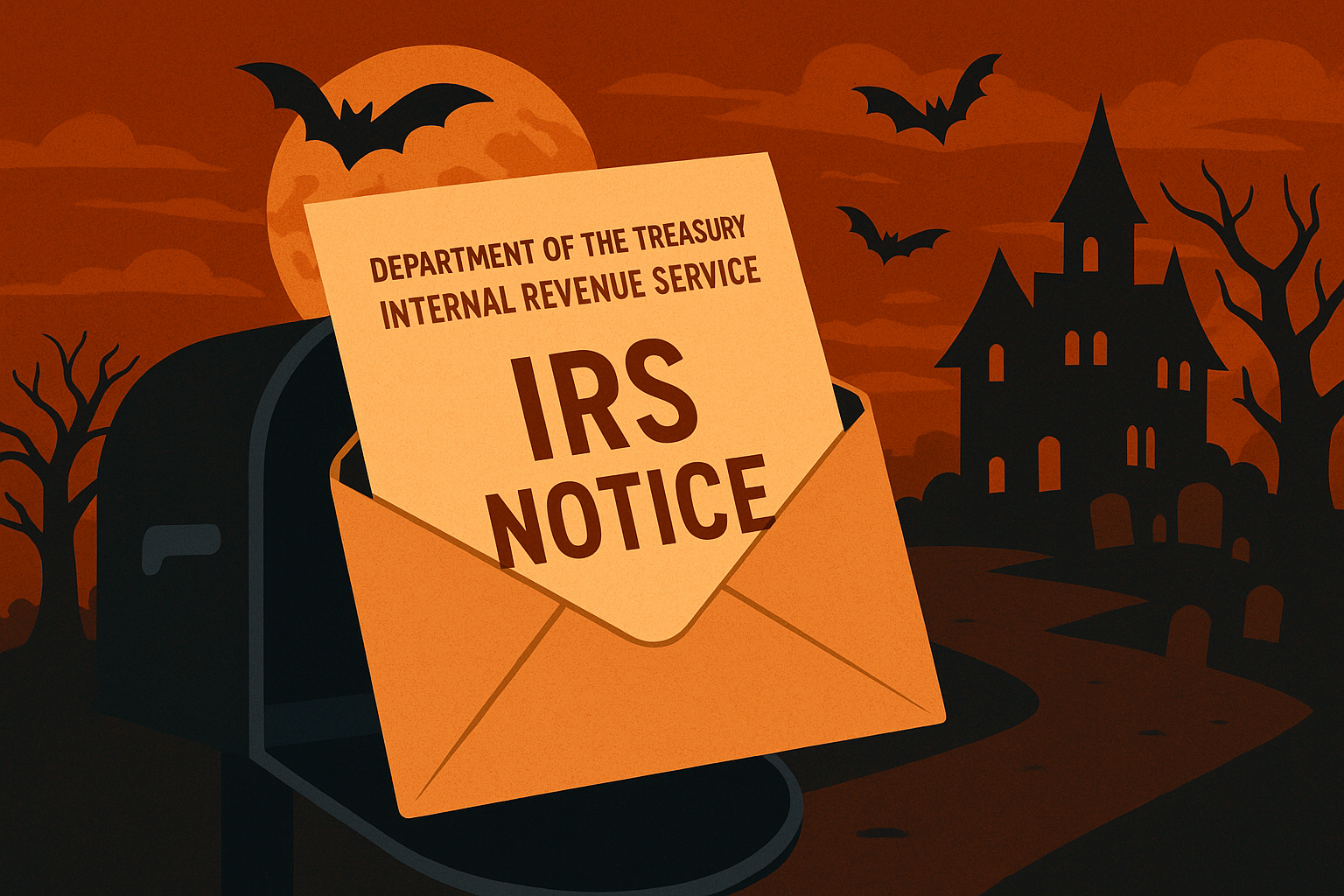
Halloween is the season of ghosts, ghouls, and things that go bump in the night. It's the time of year when monsters seemingly lurk around every corner, but few scares compare to seeing an envelope marked “Department of the Treasury – Internal Revenue Service” in your mailbox.
You feel your vision blur, you hear the blood begin to pump in your ears, this was the thriller you just didn't sign on for, but before you panic, take a deep breath: not every IRS notice is a horror story. In fact, most can be resolved easily once you understand what they mean and how to respond.
Below, I break down the most common IRS “monsters” you might encounter, and provide guidance on how to overcome the horror.
Ethereal, unexpected, and likely to leave a bit of ectoplasm behind, despite being named like it's on the way to fight John Connor, the CP2000 means the IRS believes you underreported income. Your employer, bank, brokerage, Paypal, Venmo, and even that sketchy crypto trading site you found might be reporting money that moves through them to the IRS. If that information doesn't line up exactly with what you've reported, the case of phantom income arises.
How to Handle It:
Bear in mind that in the world of tax law, you're guilty until proven innocent, so it's essential that you respond as quickly as possible (within 30 days) to prevent penalties from rising from the grave.
Softly menacing in f# minor, the CP14 notice is that first sequence of chords while the camera pans to a non-descript piece of nearby shrubbery — it'll be important later. This notice means that there's an unpaid balance on the account, and signals the beginning of IRS collection activities.
How to Handle It:
Remember that this is only the beginning of the song. If you ignore this letter, interest will continue to accrue, and the situation will worsen. There are more options to deal with this than can be explored in a single blog post, so consider consulting a tax professional for advice. A 30-minute conversation could save you months or years of time and thousands of dollars.
So you ran into the woods alone on a dark foggy night while the music ramped in the background. You'll collect each of these cursed letters in turn, and notice that they become progressively less friendly reminders that you still owe money. The way to handle these is the same as the CP14 above, but once the final chord has struck and you've received the CP504 notice, the IRS is cleared to begin pursuing enforcement activities. If you've made it to this stage, I'd strongly recommend handing your collection of cursed artifacts over to a tax professional, but be careful. The curse of the letters can addle the mind, and there are many scavengers waiting in the wings. Many scammers target those made desperate by this sequence of letters, and it is essential to choose a tax professional you can trust. Tax attorneys, subject to discipline by the BAR and malpractice suits, tend to be a safer option. https://www.irs.gov/help/tax-scams/recognize-tax-scams-and-fraud
You've reached the point where it's children's songs and girls in white dresses everytime you fall asleep. You can almost feel the heat from the boiler room. This letter means that if you don't do something, the IRS can seize property, garnish wages, or levy bank accounts.
How to Handle it:
This is one of the most frightening notices to receive, but if this is where you are, you haven't heard the banshee's cry just yet. With some quick help, you can still turn things around. If you stay smart and stay calm, you'll likely be just fine.
The notice of deficiency is your invitation to the upside-down. The IRS believes you owe more taxes, and they intend to assess additional tax. This is your opportunity to fight back, and to dispute the assessment before it becomes final (and much harder to deal with).
How to Handle it:
The idea of going to tax court is likely a nightmare that most people never want to live through. Luckily, less than 1% of all cases that get to this point are ever actually tried, so the odds are good that you'll never find yourself there. At this point, however, I would strongly suggest acquiring representation that's familiar with the pre-trial processes that can lead those cases towards dismissal or settlement. Regardless, be sure not to let that 90-day window lapse.
IRS notices can feel like unwelcome visitors that go bump in the night, but most problems can be resolved — especially if you act quickly and seek professional guidance.
Whether it’s a CP2000, a CP504, or a full-blown levy threat, you have rights and options. A skilled tax attorney can help you understand what each notice means, how to respond, and how to stop penalties before they snowball.
At The Law Office of Seth J. Howell, we help anyone face the IRS with confidence. Our firm offers flat-fee, fully remote tax representation, making it simple to get the help you need without the tricks or hidden costs.
Don’t let an IRS notice haunt you this Halloween.
Contact us today for a confidential consultation and start taking back your peace of mind.